Mechanical TV Deep Dive · Volume 10
Why Electronic TV Won
By the autumn of 1935, the BBC’s 30-line mechanical television service had closed. The Televisors that had received it went dark. Across Britain and Germany, engineers who had spent a decade pushing scanning discs toward their limits — adding colour filters, stereoscopic spirals, intermediate-film cameras, Jeffree cells — were now facing a technology that was not an improvement on the disc but its replacement. Electronic television did not just solve the problems mechanical engineers had been wrestling with. It dissolved them. The spinning aperture, the neon lamp, the chemically complex intermediate-film system — all became unnecessary at a stroke. The question was not whether electronic television would prevail, but who would build it first, and how long it would take to displace what already existed.
10.1 A Different Principle Entirely
The mechanical television principle, at its most fundamental, required physical motion. An aperture — a hole in a disc, a mirror facet on a drum, a lens on a rotating cylinder — had to move through the scene or the display field to decompose or reconstruct an image line by line. That physical motion imposed a ceiling on everything else. Faster scanning required faster spinning, which demanded heavier engineering, more precise balancing, and greater mechanical tolerance. The 30-line Baird standard fit a bandwidth of approximately 10 kilohertz — comfortable within a medium-wave radio channel — but doubling the line count at the same frame rate would roughly quadruple the mechanical speed requirement and the bandwidth. The material engineering of spinning discs set a practical ceiling.
Electronic television replaced this mechanical chain with electrons. In the transmitting camera tube, an optical image was focused onto a photosensitive surface inside an evacuated glass envelope. A beam of electrons, generated at one end of the tube and deflected by electromagnetic or electrostatic coils, scanned that surface in a precisely controlled raster — sweeping across each line in turn, then stepping to the next. As the beam traversed each point on the photosensitive surface, it read out a varying electrical current proportional to the local brightness. The output was a continuous, time-varying voltage that encoded the complete image as an electrical signal — and it was generated without any moving part larger than an electron.
At the receiving end, the cathode-ray tube mirrored the process. A modulated electron beam swept a phosphor-coated screen, point by point and line by line, in synchrony with the camera’s scan. Where the camera had sensed brightness, the display reproduced it. The image was reconstructed entirely in light from an electron beam; no disc, no neon lamp, no mechanical display was required.
The consequences for image quality were fundamental. An electron beam can be deflected far faster than any mechanical aperture can be driven. Doubling the line count in an electronic system meant adjusting the electromagnetic deflection frequency — an electronic parameter, not a mechanical one. The constraints on line count moved from metallurgy and motor engineering into electronics, and electronics was a domain that was improving rapidly in the 1930s. Where the mechanical tradition had reached 240 lines only by deploying the most sophisticated intermediate-film technology, the electronic approach could reach 405 lines without any spinning mass at all.
The difference in image brightness and camera sensitivity was equally decisive. In flying-spot mechanical transmission, the camera illuminated the subject with an intense, narrow beam of light — a single moving point of brilliance that swept the scene while a photocell registered the reflected brightness. The subject received enormous light intensity at the scanning point but zero light everywhere else; the average illumination of the scene was therefore low, and the photocell had only the reflected fraction of the flying spot’s energy to work with. This constrained the system to close-up work in small studios, with subjects capable of tolerating the heat and glare of the scanning beam.
Electronic camera tubes — in their more developed forms, the iconoscope and the Emitron — exploited a fundamentally different and more efficient principle. A photosensitive mosaic on the camera tube’s target plate converted the entire optical image into accumulated electrical charge simultaneously: every point on the image surface was charging up in parallel, throughout the full duration of the frame period. When the electron beam swept the surface to read it out, it was collecting charge that had been accumulating for the entire frame time — rather than instantaneous reflected light from a momentary spot. This charge-storage effect gave the electronic camera a sensitivity advantage of orders of magnitude — many hundreds of times, by most accounts — over the flying-spot approach at comparable illumination levels. An electronic camera could be operated in ordinary reflected-light conditions, outdoors, in a room with window light, or in a normally lit studio. The mechanical flying-spot scanner required a dedicated darkroom arrangement in which the subject sat illuminated solely by the scanning beam.
The electronic camera was not just more capable in theory. It was more useful in practice, for every programme type that the growing television service would need.
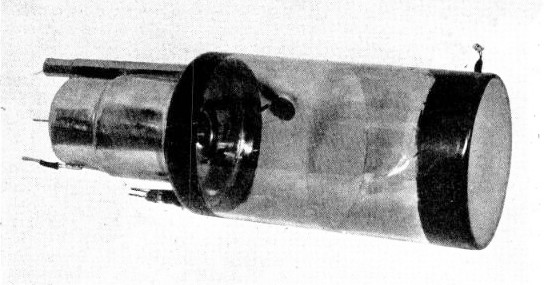
10.2 The Pioneers: Rosing’s Legacy, Farnsworth, and Zworykin
The idea of an entirely electronic television system — camera tube and cathode-ray display, no moving parts — did not emerge from nowhere in the 1930s. It traced a line back at least to 1907, when Boris Rosing, a Russian scientist, filed a patent for an image-transmission system that used a mirror-drum scanner at the transmitter and a cathode-ray tube at the receiver. Rosing’s receiving end was, in principle, electronic: the cathode-ray tube he proposed was the antecedent of every CRT display that followed. In 1911, he demonstrated the transmission of crude silhouettes of geometric shapes using this hybrid arrangement. Rosing’s work was eventually curtailed by the Soviet political climate: he was arrested in 1931 and died in internal exile in 1933. But his influence was transmitted through a student.
Vladimir Zworykin was a Russian-born electrical engineer who had studied under Rosing before emigrating to the United States, where he found employment with the Westinghouse Electric Company and later with the Radio Corporation of America. Zworykin shared his teacher’s conviction that the electronic approach was the right direction for television. On 29 December 1923, he filed a patent for what he called the iconoscope — a camera tube in which a mosaic of photosensitive cells on a mica plate was scanned by an electron beam to produce a television signal. The patent was a conceptual document of genuine significance; but the engineering it described ran considerably ahead of what Zworykin could actually build. A working iconoscope that could produce a clear, usable television image was not demonstrated until approximately 1933 — a decade after the patent filing — and the patent itself was not granted until 1938, after extensive revisions to bring it into correspondence with what had actually been demonstrated.
The person who demonstrated a working all-electronic camera first was not Zworykin but a young American inventor from rural Utah named Philo Taylor Farnsworth.
Farnsworth had conceived the idea of electronic scanning while still a farm boy, reportedly sketching the electron-scanning principle for a high-school science teacher in 1922. He moved to San Francisco and assembled a small, investor-funded laboratory to build it. Working with a team of a handful of people, Farnsworth developed the image dissector — a camera tube in which the optical image fell onto a photosensitive plate, liberating a proportional stream of photoelectrons; an electromagnetic deflection system then steered that electron stream past a small aperture, reading out the image line by line.
In September 1927, in San Francisco, Farnsworth transmitted the first clear all-electronic image using the image dissector: a simple form — by some accounts a straight line, by others a dollar sign drawn on glass — but unambiguously produced, transmitted, and received without any moving mechanical part. He was twenty-one years old.
Farnsworth continued to develop his system through the early 1930s, improving resolution and sensitivity, demonstrating it to broadcasters and investors, and filing further patents. His relationship with the Radio Corporation of America — which employed Zworykin and was backing his iconoscope development — became increasingly adversarial. RCA under its president David Sarnoff was spending heavily to develop an all-electronic television system it could control through patents, and Farnsworth’s prior work was a direct obstacle. In 1934, the United States Patent Office ruled on the priority dispute between Farnsworth and Zworykin’s iconoscope patent, finding that Farnsworth’s image dissector predated the iconoscope’s working demonstration. RCA, for the first time in its history, was required to pay royalties to an independent inventor.
The image dissector had an important limitation that the iconoscope and its successors eventually overcame: it lacked charge storage. Each point of the image was read out as its photoelectrons were generated, without the accumulation effect that gave later tubes their sensitivity advantage. Farnsworth’s dissector was thus relatively insensitive compared to the iconoscope at higher line counts. RCA’s engineering investment, and Zworykin’s development work through the early 1930s, ultimately produced an iconoscope that was brighter and more sensitive for studio use. But Farnsworth’s priority in demonstrating the principle was established beyond dispute.
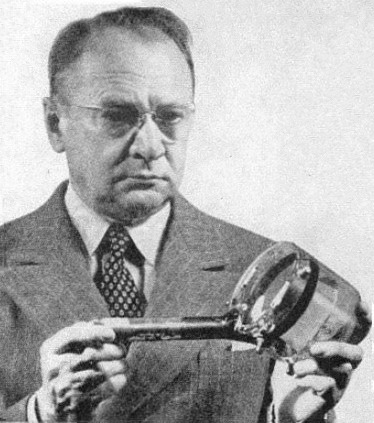
10.3 The British Track: EMI and the Emitron
While RCA and Farnsworth’s laboratory were competing in the United States, a separate and ultimately decisive electronic television programme was underway in Britain, at the Electric and Musical Industries research laboratories at Hayes, Middlesex.
EMI — formed in 1931 by the merger of the Gramophone Company and Columbia Graphophone — had built one of Britain’s most capable engineering research organisations. Its Director of Research, Isaac Shoenberg, had assembled a team of considerable depth: among the engineers working on electronic television at Hayes was Alan Blumlein, one of the most versatile electronics engineers of his generation, who contributed to the design of the scanning circuitry, deflection waveforms, and signal processing that gave EMI’s system its technical quality. The team worked systematically and with substantial resources, taking Zworykin’s iconoscope as a starting point but developing their own variant, which they called the Emitron.
The Emitron was a camera tube of the mosaic-storage type, broadly similar in principle to the iconoscope but adapted for the specific line standard and operating conditions that British broadcasting would require. Where the iconoscope used a silver-caesium photoemissive mosaic on mica, the Emitron was engineered through EMI’s own materials research and manufacturing processes. The camera tube was housed in a camera head that was considerably smaller and lighter than any intermediate-film apparatus, and it could be operated in ordinary studio lighting without the elaborate darkroom and beam-lamp arrangements that mechanical flying-spot transmission required.
EMI’s television research produced a proposal for a complete high-definition television system. When the question of a high-definition BBC service was put to formal tender, EMI partnered with the Marconi Company — which contributed transmission technology and antenna engineering — to submit a complete system: Marconi-EMI, transmitting at 405 lines per frame, all-electronic from camera to screen.
10.4 The Selsdon Committee and the High-Definition Standard
By 1934, the BBC and the British Government were well aware that the 30-line mechanical service, while historically significant, was not the future of television. A formal advisory body — the Television Advisory Committee, chaired by Lord Selsdon, and commonly known as the Selsdon Committee — was constituted to examine the state of high-definition television technology and recommend a path to a full public service.
The committee assessed the competing claims and technologies available in Britain, and determined that rather than simply choosing one approach on paper, both of the leading systems should be given a practical trial under broadcast conditions. Two companies submitted tender proposals:
- Baird Television Ltd offered a system transmitting at 240 lines, using the intermediate-film camera for outdoor and location work and a high-definition flying-spot system for studio subjects. The system was mechanical in its camera approach — not the 30-line disc of the BBC broadcast era, but a significantly more capable implementation of the principles Baird’s engineers had developed through the early 1930s.
- Marconi-EMI offered a 405-line all-electronic system, using the Emitron camera throughout, with no film or spinning disc in the signal path at any point.
The committee recommended that both systems be installed at a single site and operated in alternation, allowing a direct operational comparison under identical conditions. Alexandra Palace, the Victorian entertainment palace on high ground in north London, was selected as the site. The BBC would build a television studio in its southern end and install both systems there; the two companies would operate alternating weeks of live broadcasting, and the results would inform the final decision.
The scale of the commitment was substantial. Both companies invested in studio facilities, camera equipment, and transmission hardware at the Palace. The BBC hired production and engineering staff. The stage was set for the most direct technology competition the early television industry had seen.
10.5 Two Systems on Trial: Alexandra Palace, November 1936
The BBC Television Service launched from Alexandra Palace on 2 November 1936. It was, by the standards of what had preceded it, a genuinely high-definition service: both the 240-line Baird system and the 405-line Marconi-EMI system produced images that were categorically superior to anything the 30-line era had offered. A viewer who had owned a Televisor and watched the 30-line service through a postage-stamp viewing hood in 1932 was now watching a picture on a screen the size of a book, rendered with enough resolution to follow facial expressions across a studio set and follow dramatic action across a stage.
The two systems alternated on a weekly rota. In Marconi-EMI weeks, the Emitron cameras were deployed throughout the studio — multiple cameras, capable of covering different angles, cutting between them live, and producing a multi-camera production that looked recognisably like the studio television that would become familiar for decades. In Baird weeks, the intermediate-film cameras handled studio work alongside flying-spot scanners, the 45-second processing delay inherent in the intermediate-film system managing itself in the production chain.
The contrast in operational experience became quickly apparent to the engineers, producers, and studio crews working at Alexandra Palace.
10.6 Why the Emitron Won
The Emitron’s advantages in daily operation were practical and cumulative. Several proved decisive.
Camera mobility. An Emitron camera head was compact enough to be moved around a studio, repositioned between shots, and operated by a single camera operator. Multiple Emitron cameras could cover a studio simultaneously, allowing live cutting between angles. Baird’s intermediate-film apparatus was not a camera in this sense: it was a system in which film was shot, developed, and scanned, with the whole apparatus occupying significant space. The flexibility that a multi-camera studio required — the ability to reframe quickly, to follow action, to cover a set from multiple angles in real time — was available with the Emitron and was not available with the intermediate-film system.
Outdoor and location work. The Emitron camera could be taken outside and operated in natural daylight. Its charge-storage principle gave it the sensitivity to work in reflected ambient light without supplementary illumination. Baird’s intermediate-film system was also capable of outdoor work — that had been the rationale for developing it — but it carried with it the mechanical and chemical complexity of the developing unit, the 45-second processing delay, and the operational hazards of the cyanide-based developer chemistry. Emitron gave the BBC an outdoor television camera; intermediate-film gave a constrained approximation.
Reliability. Electronics, in the mid-1930s, was a more mature engineering discipline than the intermediate-film chemistry. Vacuum tubes failed, but they failed in predictable ways; a tube could be replaced. The intermediate-film developing unit was a precision mechanical and chemical system in which gas bubbles in the developer tank could interrupt the image, chemical balance required constant monitoring, and the film itself was handled wet and unfixed under conditions where any contamination or mechanical problem could destroy a transmission. The Emitron system was by no means trouble-free — early electronic systems were fussy and required careful alignment — but its failure modes were more tractable.
Studio lighting. The Emitron worked under normal studio tungsten lighting. The Baird flying-spot scanner for studio work required the subject to be lit by the scanning beam itself, in a darkened environment; performers had to sit still in the beam’s glare, able to move only slightly. For drama, variety, music, and the full range of programming a television service would carry, the Emitron’s ability to work in a properly lit studio, with sets, costumes, and movement, was an enormous practical advantage.
Higher definition. The 405-line Marconi-EMI image was significantly sharper than the 240-line Baird image. Both were revolutionary compared to the 30-line era, but 405 lines allowed finer detail in faces, lettering, and set design. For the viewers who purchased high-definition receivers — the receivers sold commercially from late 1936 were designed to receive both standards, with a switch to select between them — the difference in the two systems’ images was visible.
10.7 A Fair Reckoning: Baird’s Place
It would be wrong to close this account of electronic television’s victory without noting clearly what Baird had accomplished — and what his position in the 1936 contest actually reflected.
John Logie Baird had begun building television transmitters in 1923, when Vladimir Zworykin was filing patent applications that described devices he could not yet build, and when Philo Farnsworth had not yet started his San Francisco laboratory. Baird’s 1925 and 1926 demonstrations were the first time any audience had seen moving, tonal images transmitted by television. His 30-line BBC service, running continuously from 1929 to 1935, was the world’s first regularly scheduled public television broadcast, and it created the institutional framework — the BBC’s production practices, the commercial receiver market, the public concept of television as a domestic medium — on which all subsequent British broadcasting was built.
The intermediate-film system that Baird deployed at Alexandra Palace was itself a serious engineering achievement. Its use at the 1936 Berlin Olympics by German television, and its employment at Alexandra Palace for three months of live broadcasting, demonstrated that it could work in production. Baird had pushed the mechanical approach as far as it could be pushed, and in doing so had established what television production needed and what an outdoor camera had to deliver. The specification against which the Emitron succeeded was, in significant part, a specification that Baird’s own work had defined.
What Baird had not done — and could not do, given his resources and the nature of his approach — was the sustained, heavily funded, team-based research and development that produced the Emitron. EMI’s research programme was a corporate engineering effort, operating with resources no independent inventor could match. Baird’s company was always smaller, more entrepreneurially driven, and more dependent on demonstration than on systematic development. The intermediate-film system that competed at Alexandra Palace was the best that Baird Television Ltd could offer; but it was competing against an organisation whose entire production line was aimed at making that system unnecessary.
There was no disgrace in losing this competition, and no dishonesty in Baird’s decision to participate. He had argued, correctly, for years that high-definition television was necessary and that the BBC should develop it. He had developed a system capable of operating in production at 240 lines. That the system he offered was mechanically and operationally outclassed by what EMI had built does not diminish what he had built; it reflects the scale of the engineering distance between the two approaches, which became visible only when they were placed side by side in daily use.
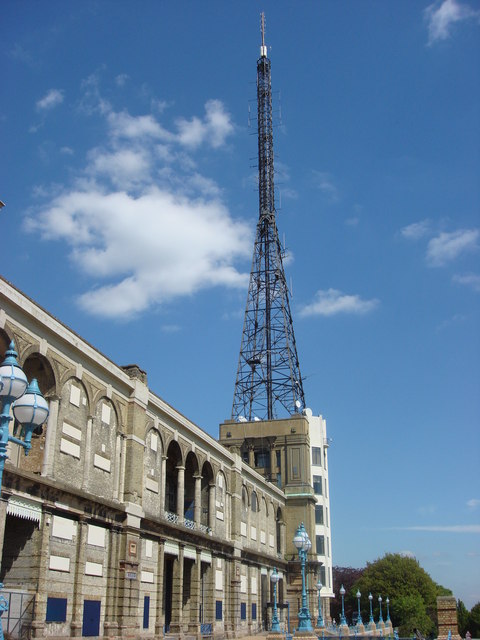
10.8 The Decision and Its Aftermath
After approximately three months of parallel operation — the Baird and Marconi-EMI systems alternating week by week from November 1936 — the BBC reached its conclusion. The decision was announced in February 1937: the Baird system would be withdrawn, and the BBC Television Service would continue solely on the Marconi-EMI 405-line electronic system.
The operational record of the trial made the decision straightforward. The Emitron cameras had proved themselves in multi-camera studio production, in outside broadcasts from the Alexandra Palace grounds, and in the range of programme types that a general-purpose television service required. The Baird intermediate-film system, for all its ingenuity, had shown the practical constraints of mechanically processing film in real time during live television: the chemical complexity, the 45-second transmission delay for intermediate-film material, and the inability to match the Emitron’s camera flexibility made it, in operational terms, the inferior system for the service the BBC intended to build.
The 30-line era had ended in September 1935. The 240-line mechanical era, brief and intense, ended in February 1937. From that point, British television was entirely electronic.
The 405-line standard was the British television standard for broadcasting from 1937 until 1985 — forty-eight years. It remained in use on BBC 1 and ITV for the duration of black-and-white broadcasting, and persisted in the transition to colour (on VHF Band I and III transmitters) even as 625-line UHF colour services expanded from the late 1960s onward. It was finally switched off in January 1985. The standard that EMI’s engineers built for the Alexandra Palace trial outlasted every mechanical television system by half a century.
10.9 What Mechanical Television Left Behind
The disappearance of mechanical television from broadcasting did not mean the disappearance of its ideas, its people, or its legacy.
The scanning principle that Paul Nipkow had patented in 1884, and that Baird had turned into a practical broadcast system in the 1920s and 1930s, did not become obsolete. Sequential scanning — decomposing an image into a series of time-sequential brightness values and reconstructing them at the receiver in synchrony — was, and remains, the fundamental principle of all television. The electronic camera tube and the cathode-ray tube were faster and more capable implementations of exactly the same scanning logic that the Nipkow disc embodied. The disc was replaced; the principle continued.
The Phonovision discs that Baird had cut in his Soho laboratory between 1927 and 1928 — five wax gramophone records encoding a 30-line television signal at audio frequencies — remained, for six decades, the earliest recordings of a television signal in any medium. Donald McLean’s digital recovery of their contents in the 1990s restored viewable images from 1927 and 1928: the earliest moving pictures of human faces that survive from the entire history of television. The discs are now in museum collections; McLean’s Restoring Baird’s Image (IET, 2000) documents both the originals and the recovery process. (These recordings are covered fully in Vol 8.)
The intermediate-film system was discarded as soon as reliable electronic cameras became available — immediately, as the events at Alexandra Palace showed. But it had served as the only means of mobile location television for several years, covering the 1936 Berlin Olympics and three months of BBC production, and it established definitively what an outdoor television camera needed to do.
And the hobby of mechanical television did not die. In the decades after broadcasting abandoned the spinning disc, a community of enthusiasts kept alive the interest in Nipkow-disc receivers, 30-line standards, and the experience of watching a moving image in orange neon light through a postage-stamp-sized window. This community eventually formed the Narrow-Bandwidth Television Association in 1975, established a modern standard — 32 lines, 12.5 fps, audio-bandwidth signal — and continues today as an active international hobbyist body. The NBTVA, and the modern standard it maintains, are the subject of Vol 11 — The Modern Revival.
10.10 Cross-References
- The 30-line BBC mechanical television service that preceded the Alexandra Palace era — its programmes, its audiences, its Phonovision recordings — is covered in Vol 8 — The 30-Line Broadcast Era (1929–35).
- Baird’s colour, stereoscopic, large-screen, and intermediate-film experiments that led to the Alexandra Palace system are described in Vol 9 — Pushing the Limits.
- Boris Rosing, whose work influenced Zworykin and whose hybrid mirror-drum-and-CRT system anticipated the fully electronic approach, is introduced in Vol 7 — The Rivals.
- The modern hobbyist revival of mechanical television — the NBTVA, the 32-line standard, and the community that carries the tradition forward — begins in Vol 11 — The Modern Revival: NBTV and the NBTVA.
- The 30-line and 32-line standards are tabulated and compared in Vol 16 — Reference and Cheatsheet.
Comments (0)