Mechanical TV Deep Dive · Volume 14
Acquiring a Mechanical Television
Every deep dive so far in this series has treated the Baird Televisor as a historical object: something to be explained, diagrammed, dissected, and dated. This volume asks the question a reader who has made it this far is most likely actually holding — not “how did it work” but “how do I get one” — and the honest answer is uncomfortable enough that it is worth stating plainly before anything else: almost nobody reading this will ever own a genuine, 1930s-manufactured Baird Televisor, and the handful of times one has changed hands in public in the last twenty years, it has done so for tens of thousands of pounds, at one of a very small number of specialist auction houses, to a buyer who was already watching for it. That is not a reason to close this volume. It is the reason this volume exists — because a great deal of the mechanical-television world is genuinely, affordably, joyfully accessible: discs, motors, circuit boards, period radios that sat on the same shelves, and a thriving hobbyist club that will teach a determined person to build the real experience from parts costing a few tens of pounds rather than tens of thousands. What follows is a deliberately honest map of that terrain — what is realistically buyable, what only turns up if you are patient and a little lucky, what almost never turns up at all, and how to tell the difference before money changes hands.
14.1 The Headline: You Almost Certainly Cannot Simply Buy One
Start with the number the rest of this volume keeps returning to. Baird Television Ltd, through the Plessey Company, manufactured and sold approximately 1,000 Televisor receivers to the public beginning in 1930, at a price of roughly £18–26 depending on the model (Vol 3, §3b) — already a considerable sum, illustrated concretely by a modern retrospective’s own comparison: at the upper end, that £26 could instead have bought a woman’s winter coat, a man’s overcoat, an electric sewing machine, an electric washing machine, and a gas stove, with the source’s own verdict being simply “not a cheap buy.” Ninety-plus years, at least one World War, decades of “why do we still have this obsolete box” clear-outs, and the ordinary attrition of fragile glass, wiring, and neon later, only a small fraction of that thousand-unit production run is known to survive at all — and of those survivors, the great majority sit in institutional collections: the Science Museum Group, the National Science and Media Museum, and international peers such as Sydney’s Powerhouse Museum all hold documented, catalogued Televisor specimens, which is to say they are not coming up for sale, ever, by design.
What does occasionally reach the open market is tracked, in this research, through the single auction house where every confirmed public sale of a genuine unit in the last fifteen years was found to have taken place: Bonhams. Three separate, dated Bonhams results anchor everything else this volume says about price. On 30 September 2009, at a specialist sale of early television sets, a genuine Plessey-built Televisor made £18,000; in the same sale, a Televisor shop-display model — not a genuine domestic receiver, a piece built for use in a retailer’s window — made only £5,040, more than three times less, a first hard demonstration that “a Baird Televisor” is not one uniform thing. On 31 October 2017, unit No. 192 of the roughly one thousand made, restored to working order in 1978 by a named restorer (George Windsor) and with a documented provenance — owned since the 1930s by the family of a Thames Valley electrical-shop proprietor, kept in the family home for at least 45 years before consignment — sold against a pre-sale estimate of up to £15,000 for a hammer price of £17,000, or £21,250 including buyer’s premium (roughly US$28,000 at the time). Most recently, in an online sale spanning 2–12 September 2024, unit No. 207, cased in an olive-green tinplate finish rather than the earlier example’s chocolate brown and with its neon lamp broken, still made £16,640 including premium — more than three times its revised £3,000–£5,000 estimate. Read together, those three results — 2009, 2017, 2024, every one of them Bonhams, nowhere else confirmed — cluster in a rough £16,000–£21,000 band even for a damaged example, which is as close to a real, evidence-based price expectation as this volume is willing to state. It is not a liquid market with a settled price; it is three data points across fifteen years, and the next genuine example to surface could easily land outside that band in either direction. Anyone who tells you a firmer number than that is guessing.
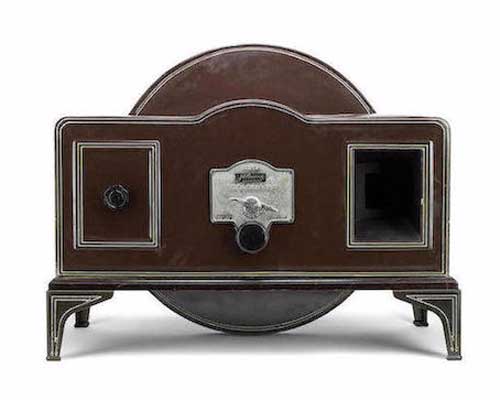
A caution belongs here too, because auction-listing language is not always as literal as it looks. A November 2017 lot from the German house Auction Team Breker was catalogued as a “Working Model of the Baird Televisor, 1928 onwards” — a metal body and mechanism housed in a separate Perspex display case. No confirmed sold price for that lot turned up in this research, and that is beside the point: the phrase “working model” is worth reading exactly as written, not glossed over as a synonym for “an original Plessey-made 1930 production Televisor.” A model can mean a genuine period demonstration or prototype piece, a later reconstruction, or something built explicitly as a museum-style working replica — the word does real descriptive work, and a buyer who skims past it risks paying genuine-Televisor money for something that was never claimed to be one. Read every catalogue description slowly, and ask the house directly what “model” means in a given listing before assuming the best case.
14.2 Why So Few Survive
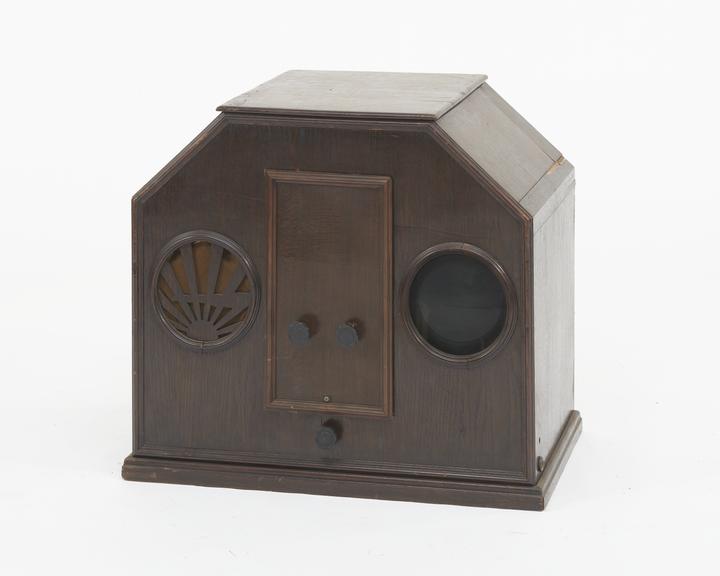
The rarity above is not simply a matter of age. A production run of roughly 1,000 units was already small by the standards of any mass-market appliance, but the Televisor was smaller still in an even more revealing way: the Science Museum Group’s own catalogue entry for its Model C Televisor — nicknamed the “Noah’s Ark” Televisor for its distinctive gabled wooden cabinet, and explicitly logged as an incomplete, pre-production specimen — records that only around twenty of that particular model were ever built, in 1928, with “over ten of them going to the company directors and the rest used for demonstrations.” Twenty units, a year before the commercial Televisor even reached the public, is some fifty times fewer than the already-small commercial figure — a sharp reminder that “rare” describes several different populations of genuine Baird hardware, not one.
Beyond the small numbers, the Televisor itself was built to be discarded rather than preserved. Vol 6 and Vol 13 both describe the hardware in detail: a spinning disc whose accuracy determined picture quality outright, a neon lamp with a finite working life and no modern replacement supply, hand-wired valve circuitry, and — as the 2024 Bonhams example’s broken neon lamp demonstrates directly — components that fail and are not easily sourced new. The Televisor was also rendered technically obsolete astonishingly fast: the BBC’s 30-line service, for which every commercial Televisor was built, ran for barely six years (1929–1935, Vol 8) before the switch to 405-line electronic television (Vol 7, Vol 10) made the entire class of receiver useless for anything but a shelf ornament. A household that had paid something like £18–26 for a device with roughly half a decade of practical life ahead of it had every incentive to eventually clear it out, particularly through the privations of the Second World War and the metal and material drives that followed, when an obsolete wooden-and-tinplate box with no working broadcast to receive was an obvious candidate for the scrap heap rather than the attic. The genuine survivors that do exist, including both auctioned examples described above, are notable precisely for having escaped that fate through family indifference or sentiment rather than deliberate preservation — the 2017 example’s documented 45-plus years sitting quietly in one family’s home is the realistic shape of how a genuine Televisor actually survives to be rediscovered, not a dealer’s inventory or a collector’s active search.
14.3 What Actually Turns Up: Parts, Ephemera, and Period Radios
If a complete genuine Televisor is effectively off the table for all but the most patient (and well-funded) hunters, the honest next question is what actually does surface, with some regularity, for a collector or restorer to work with. The answer sits at a very different price point than the headline auction results above, and it is worth taking seriously on its own terms rather than treating it as a consolation prize.
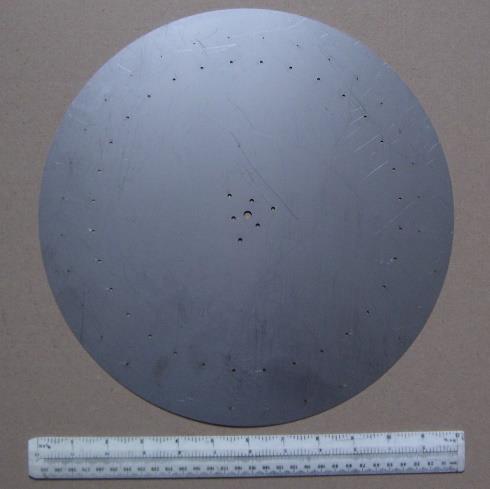
Parts and hardware. Loose components from period sets — Nipkow discs, motors, neon lamps, synchronizing hardware — occasionally appear individually at specialist auctions, through dealers in scientific instruments, or via estate clearances, though no systematic, confirmed sold-price data for individually-traded period parts (as opposed to complete sets) was found in this research; treat any specific figure for a loose period part as unconfirmed until seen directly. What is confirmed, and worth taking seriously as a genuinely different and much cheaper market, is the modern parts supply run by the NBTVA’s own Club Sales operation (Vol 11, §8c): a members-only shop, UK Royal Mail shipping only, selling exactly the components a builder needs to put together a working 32-line disc televisor from scratch. Real, current prices confirmed directly from the club’s own price list: a 12-inch Manila Nipkow disc for £7.50, the same in stainless steel for £11.00, a motor for a 12-inch disc televisor for £3.50, plastic hubs and motor-support clips at 50 pence each, unpopulated driver PCBs at £2–£5, and the laser-cut CAD design files for the latest club televisor design given away free. A complete set of parts to build a working modern disc televisor runs to a few tens of pounds — genuinely, deliberately, a different universe from the four-to-five-figure sums the genuine article commands.
Paper ephemera. A distinct and comparatively affordable lane is documentary material rather than hardware: programme schedules, contemporary lecture slides, subscriber contracts of the kind Vol 3 (§3b) notes Televisor buyers had to sign, and period publications about the new medium. The 2009 Bennett-Levy sale that produced the £18,000 and £5,040 Televisor results above also included several lots of exactly this material — lecturing slides, booklets, and 1926–1932 programme schedules — each selling for £1,800. That is not pocket change, but it is a genuine collecting lane a determined hunter without five-figure sums to spend on hardware can actually pursue, and it carries none of the authenticity risk hardware does (a signed 1930s programme schedule is difficult to convincingly fake and easy to date).
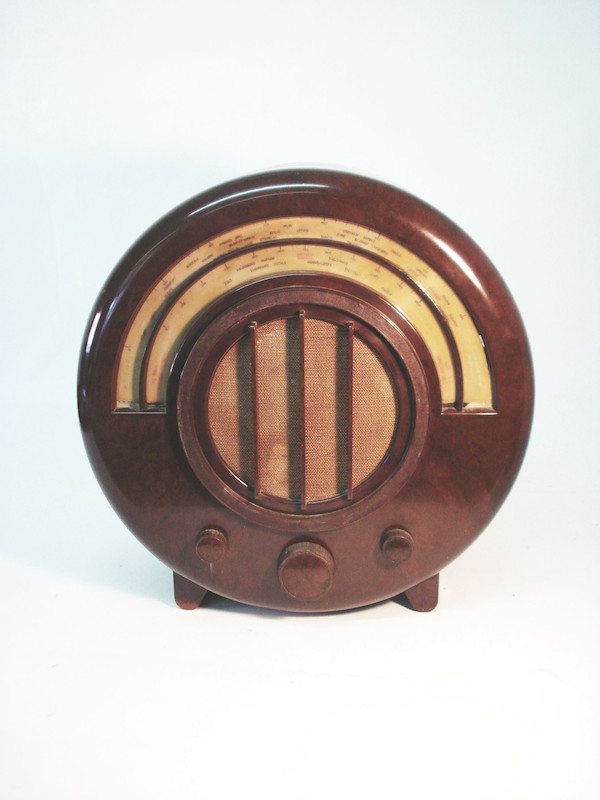
Period radios of the sort that turn up alongside it. Anyone hunting mechanical-television material will spend most of their actual search time looking at 1930s British radio sets, simply because they were made in vastly larger numbers, are actively collected by their own dedicated community (the British Vintage Wireless Society, among others), and share collecting venues, decades, and sometimes even manufacturers with Televisor material. The gulf in price is instructive. An Ekco AD65 — the round, brown Bakelite 1934 design by Wells Coates, a bona fide Art Deco design icon and one of the most actively collected British radio designs of the era, not a plain or undesirable set — made £360 including premium at a 2009 Bonhams sale and £528 at a further 2010 sale. That is a design-icon result, and it is still roughly one-fortieth of what a genuine Televisor realises. Plainer, non-designer 1930s valve sets list routinely on eBay UK for well under £100, some under £25 — those are asking prices from live listings rather than confirmed sales, and should be treated as an approximate ceiling on what a functional but unremarkable period radio might cost, not a guarantee. The practical upshot for a Televisor hunter: period radios are genuinely abundant, genuinely affordable by comparison, and a legitimate, satisfying collecting target in their own right — including as scavenged sources for period-correct valves, dials, and cabinet hardware for a restoration project (Vol 15).
14.4 What Actually Turns Up: Replicas and NBTV Club Builds
The other genuinely accessible route into mechanical television is not buying period material at all, but building a modern equivalent — and this is where the NBTVA (Vol 11) stops being merely a source of parts and becomes the actual destination for most people who want the experience of a scanning-disc picture rather than a museum-grade artifact to own. The club’s beginner path, documented in detail in Vol 11 and Vol 13, walks a builder from a pre-drilled, numerically-machined disc through motor, LED light source, and synchronising circuit to a working 32-line receiver — using the same Club Sales parts list above, at the same few-tens-of-pounds total cost, rather than anything salvaged from a genuine period set.
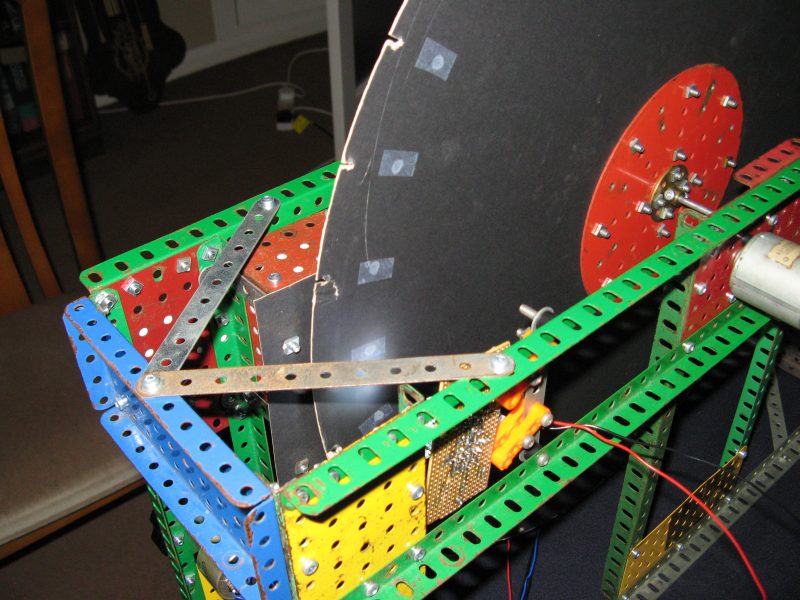
It is worth being precise about what does and does not exist in this space, because the honesty this volume promises cuts both ways. What is well documented: an active club of builders, a members-only parts supply chain, a beginner-to-advanced construction path (Vol 11, §8c and §8e), and individual members’ build logs shared openly on the club forum and personal pages. What was not found in this research, and should not be assumed: any kind of routine open market in complete, finished club-built televisors changing hands for money. The culture documented by the club’s own literature is building for yourself, showing work at the annual Convention (Loughborough, per Vol 11), and helping other members — not a resale trade in finished sets. If a complete hobbyist-built televisor were ever offered for sale, no market data exists in this research to price it, and a buyer should not expect to find one waiting; the realistic path to owning a working disc televisor, for the overwhelming majority of people who want one, is building it, not buying it.
14.5 Evaluating Condition and Authenticity
Whichever end of this market a reader is hunting in, the practical skill is the same one an art or antiques buyer needs anywhere: knowing what a genuine article actually looks like well enough to recognise a fake, a heavily altered piece, or simply a mismatched description before money changes hands.
For a claimed genuine production Televisor, Vol 6’s hedged physical specifications are the checklist to work from, cross-referenced against what real auctioned examples have actually shown. Expect: a disc in the approximate 30–45 cm range with flat, square-section apertures (genuine Baird discs are catalogued as square-hole, and were non-lensed on the standard set — Vol 6, §11a, Vol 13), a flat-plate neon lamp sized to roughly match the 7:3 portrait picture window, a light-tight viewing hood, and a cabinet built around a mahogany baseboard under a tinplate case — though the exact case colour is not fixed: the two most recent confirmed Bonhams examples show a chocolate-brown case (2017) and an olive-green case (2024), so colour alone does not confirm or disqualify a unit. Genuine documented examples carry a cast “Eye-of-the-World” plaque bearing Baird’s signature and, usefully, an individual serial number out of the roughly 1,000 made — both the 2017 (No. 192) and 2024 (No. 207) auctioned examples are numbered this way, and a claimed genuine unit with no serial number, or with catalogue photography that avoids showing one, is worth extra scrutiny. Provenance paperwork matters as much as the object itself: the 2017 example’s documented restoration history (a named restorer, George Windsor, working in 1978) and family ownership record (in one family from the 1930s, in the family home at least 45 years) are exactly the kind of continuous paper trail that gives a specialist auction house — and a buyer — real confidence, and their absence on an otherwise-plausible unit is a legitimate reason for caution, not a fatal flaw, but a prompt to ask harder questions.
For anything described as a replica, model, or reproduction, the working assumption should be the opposite of suspicion — it is not trying to deceive anyone, provided it is honestly labelled — but it is worth knowing what marks a piece as modern rather than period. Modern club builds documented in Vol 11 and Vol 13 use materials period engineering did not: laser-cut acrylic or numerically-machined stainless-steel or plastic discs (rather than the aluminium or manila-type material of period and early club discs), Meccano or other modern structural framing, LED clusters rather than a single flat neon plate, and printed-circuit-board synchronising electronics rather than hand-wired valve circuits. None of that makes a modern build worth less as an object to actually use and enjoy — quite the opposite, per the previous section — but it does mean a seller describing such a piece as “a genuine 1930s Televisor” rather than “a modern NBTV-standard disc televisor” is either mistaken or misrepresenting it. What is not a reliable authenticity test, contrary to a common assumption, is the shape of the disc’s holes: a genuine Plessey-built Baird Televisor’s Nipkow disc is itself documented with square apertures — Bonhams’ own catalogue for the provenanced 2017 example (No. 192) describes it precisely as a “30-line square hole Nipkow disc” — so square-section holes are a feature of the genuine article, not a mark against it (the Italian Fracarro disc discussed in Vol 13 also used square holes). The more useful physical tell is the modern materials and workmanship above, together with the coarser, often larger-diameter, less precisely placed holes typical of a hobbyist’s first hand-drilled attempt versus a factory-cut period disc. And as the Auction Team Breker “working model” example above illustrates, catalogue language itself deserves the same scrutiny as the object: read exactly what a listing claims, ask the house directly what “model” or “replica” means in that specific description, and do not fill in the more exciting reading yourself.
14.6 Rough Price Bands, Honestly Stated
Pulling the confirmed data points above into bands, stated with the hedges they deserve rather than false precision:
A genuine, complete production Baird Televisor (Plessey-made, c.1930–33): the only confirmed public sales found in this research cluster in roughly the £16,000–£21,000 range including buyer’s premium (2009: £18,000; 2017: £21,250; 2024: £16,640, this last with a broken neon lamp) — but this is three data points across fifteen years from a single auction house, not a price list, and the next sale could land well outside this band. A display or non-genuine example (the 2009 shop-display model) can sell for a fraction of that — £5,040 in the same sale that saw a genuine unit make £18,000.
Original period ephemera (programme schedules, lecture material, subscriber contracts): confirmed lots have made roughly £1,800 each (2009 sale) — a genuinely different, lower-but-still-real price tier, and a legitimate collecting target for a smaller budget.
Iconic period radios of the design-icon tier (an Ekco AD65 and comparable Wells Coates-era sets): confirmed sales in the £360–£530 range including premium. Plainer, non-designer 1930s valve sets: commonly listed well under £100 on eBay, some under £25 — asking prices, not confirmed sold results, and offered as an approximate ceiling rather than a guarantee.
Modern NBTVA club parts — the real, current cost of building rather than buying: individual components from roughly 50 pence to £11 each, design files free, a complete disc-plus-motor-plus-driver parts set for a working 32-line receiver totalling a few tens of pounds.
A complete modern hobbyist-built televisor, if one were ever offered for sale: no market data exists to price it in this research. Treat any number offered for one as a private negotiation, not a market rate.
No band above should be read as a promise. Genuine Televisors trade so rarely that each sale is closer to a unique event than a market transaction in the usual sense, and every number here is stated with the sourcing and the hedges attached in the research record behind this volume — treat this section as an honest snapshot of what has actually happened, not a valuation service.
14.7 Where to Look: Auctions, the NBTVA, and the Rest
Given all of the above, a realistic search strategy has to be built around several genuinely different channels, each suited to a different part of this market.
Specialist auction houses. Every confirmed genuine-Televisor sale located in this research went through Bonhams, generally under an “Instruments of Science and Technology” (or similarly named scientific-instruments) sale category — a recurring, named sale series worth watching directly on Bonhams’ own site rather than hoping a general search engine surfaces the listing in time. Other major houses (Christie’s, Sotheby’s) and continental specialists such as Auction Team Breker (Germany) do deal in early technology and occasionally list mechanical-television material, though this research did not locate a confirmed genuine-Televisor sold-price result from any house other than Bonhams — worth monitoring, but not yet a proven second source.
The NBTVA. For everything short of a genuine period set — parts, community, technical help, and the actual path to a working modern receiver — the club described fully in Vol 11 is the single best resource: its members-only Club Sales operation for real, currently-priced components; its quarterly Newsletter and active forum (taswegian.com/NBTV/forum) where members discuss builds, sources, and occasionally surplus material; and its annual Convention in Loughborough, the one reliable in-person venue where a hunter can actually see working equipment and talk to the people who build it.
The British Vintage Wireless Society and radio dealers. Because so much of what actually turns up in this space is 1930s radio rather than Televisor hardware proper, the BVWS’s own regular auctions (and the wider vintage-radio dealer and eBay trade) are worth following in parallel — both for their own sake and as a source of period-correct valves, dials, and cabinet parts useful for a restoration (Vol 15).
eBay and general online marketplaces. Realistically the venue for parts, ephemera, and modern reproduction/hobbyist material rather than genuine complete sets, given how rarely those actually surface — but worth continuous, low-effort monitoring for exactly that reason, since a loose neon lamp, a period magazine, or an unrecognised piece of Baird-era hardware is more likely to appear here, mispriced by a seller who does not know what they have, than to be correctly catalogued at a specialist house.
Estate sales and probate clearances. The genuinely realistic route by which an unrecognized genuine Televisor actually resurfaces — the 2017 Bonhams example’s own documented history (in one family from the 1930s, consigned after 45-plus years) is close to the archetypal story. This is, by nature, close to impossible to search systematically; it rewards general vigilance (local estate-sale listings, word of mouth in vintage-radio and antiques circles) far more than any targeted search term.
14.8 The Practical Hunt
All of the channels above have one thing in common: they reward continuous attention far more than any single well-timed search, because the item a hunter wants might appear, mispriced or unrecognised, on any general marketplace at any time, with no advance notice and often no correct description. That is precisely the gap a systematic daily search tool is built to close, and it is the reason this deep dive is cross-linked to a tool built for exactly this kind of hunting: a daily marketplace-scan digest, running as an automated routine, that searches a broad set of online marketplaces each morning against a tunable “want list” of the sort of thing its owner is actually looking for, and mails back a short, ranked list of the best current matches. A mechanical-tv want was added to that digest specifically to surface Baird-, Nipkow-, and NBTV-relevant listings — loose discs, period radios, Televisor-adjacent hardware, club-build parts — alongside its owner’s other collecting interests, exactly the kind of low-probability, high-value search this volume has just argued is otherwise mostly a matter of luck and vigilance. It will not make a genuine Televisor common; nothing will. But it is the honest, practical answer to “how do I actually keep looking” once a reader has absorbed everything above about how rare the real thing is and how much more there is to find around its edges.
Practical search terms worth running, by hand or through an automated tool alike, follow directly from the vocabulary this whole series has built up: “Baird Televisor,” “30-line television,” “Nipkow disc,” “NBTV” or “narrow-bandwidth television,” “mechanical television,” and — for the adjacent, more affordable material — the specific period radio manufacturers (Ekco, Murphy, and others documented by the BVWS) whose sets shared shelves, decades, and sometimes even factories with Baird’s own hardware.
14.9 Cross-References
- What a genuine Baird Televisor’s hardware should actually look like — disc, neon lamp, viewing hood, and the manual phasing control referenced in this volume’s authenticity checklist — is dissected in full, with its confirmed hedges, in Vol 6 — Inside the Baird Televisor.
- The founding, membership, Club Sales operation, and modern build culture of the NBTVA — the source for every current parts price and build-culture claim in this volume — is told in full in Vol 11 — The Modern Revival: NBTV and the NBTVA.
- The engineering detail behind evaluating a disc’s quality — aperture size and shape, radial and angular pitch, and the genuine period Fracarro square-hole disc referenced in this volume’s authenticity section — is set out in Vol 13 — Optics, Discs & Mechanics in Depth.
- Once a genuine set, a set of parts, or a modern kit has actually been acquired, the hands-on bill of materials, build sequence, and restoration/calibration steps — deliberately not duplicated here — are the subject of Vol 15 — Restoration & Building.
- The Baird 30-line and modern NBTV 32-line standards, and the other reference figures this volume assumes, are tabulated side by side in Vol 16 — Reference and Cheatsheet.
- The companion Televisor Kit Build dive on this site documents assembling and driving a modern NBTV kit end to end, including the steampunk cabinet build, once the acquisition question this volume answers has been settled.
Comments (0)